Wando - Jeju
Crossing approx. 2 hours 40 minutes

From
€16
Prices
The operator tariffs for all three corridors in one place, compared and bookable in your own currency
Entry fares for the main crossings; the operator shows the tariff for your travel date at booking.
Prices per person, one way
© OpenStreetMap contributors
All three corridors price the same way: a passenger fare per person that depends on the cabin class and a separate vehicle fare by vehicle class. The figures below are the operator tariffs as published on 2026-08-06, in Korean won, one way, for an adult; the booking boxes show the current fare for your date in your own currency. The operators grant a small discount for online booking on some ships.
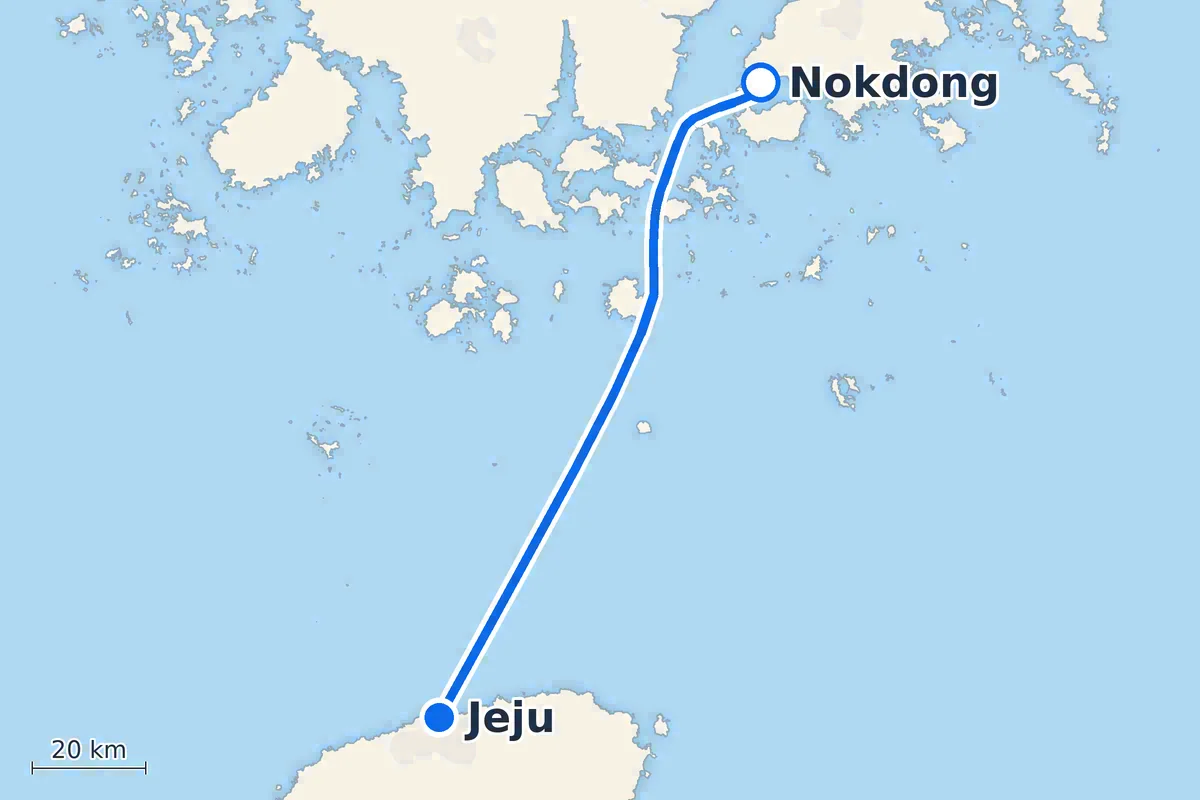
Two ships with two tariff levels. On the Gold Stella, the large flagship, an economy place costs 32,250 KRW on weekdays and 35,500 KRW on weekends, a standard seat 34,950 and 38,400 KRW, and bunk places in the shared sleeping room 50,800 and 55,900 KRW. Cabins are sold per room, from twin rooms at 140,400 KRW up to the four-person royal suite at 432,000 KRW on weekdays. On the Silver Cloud, the third-class room costs 29,850 and 32,800 KRW, the second-class room 32,350 and 35,600 KRW, a second-class seat 36,600 and 40,300 KRW; first-class beds start at 52,500 KRW per person.
For vehicles, the class ladder starts at 90,280 KRW on weekdays for city cars like a Morning or Spark, reaches 129,620 KRW for the Avante class and 142,280 KRW for the Sonata class, with holiday fares a step higher.
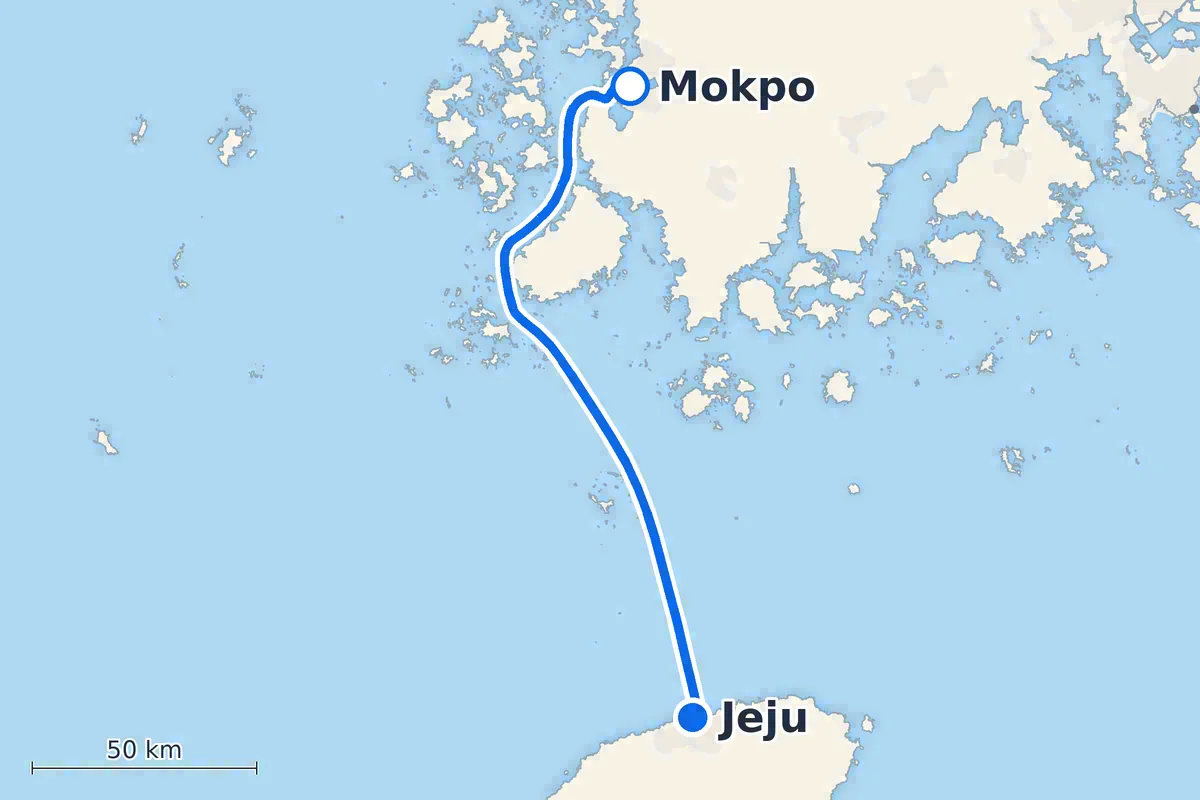
On the Queen Jenuvia 2, the night ship from the Samhak pier, an economy place costs 32,300 KRW on weekdays and 35,400 KRW on weekends, a bunk in the shared sleeping room 62,000 and 68,000 KRW, and cabins run from the junior suite at 150,000 KRW to the two-person VIP room at 500,000 KRW on weekdays. The Queen Jenuvia flagship prices one step higher, with economy at 35,400 and 38,800 KRW and cabin classes rising accordingly.
Vehicles start at 104,000 KRW on weekdays for city cars, with the Avante class at 117,080 KRW, the Sonata class at 143,040 KRW and larger cars, campervans and motorbikes priced by their own classes; online booking earns a small discount on the vehicle fare here.
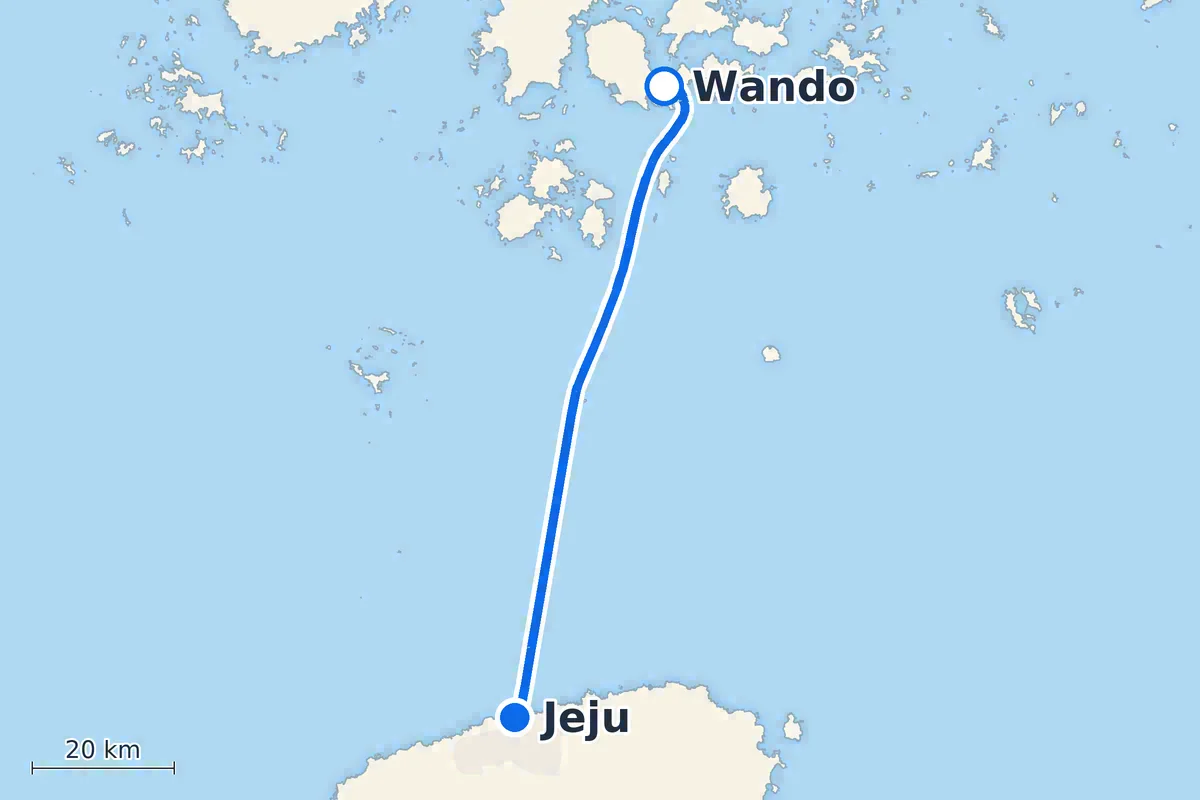
The Arion Jeju keeps the simplest tariff: third-class floor space at 30,300 KRW, a second-class room at 42,100 KRW, a second-class bed at 70,400 KRW and a first-class bed at 115,600 KRW, each one way and already including the small terminal fee. Weekends and holiday periods add ten percent. Vehicles range from 96,600 KRW for city cars over 131,000 KRW for the Avante class to 149,100 KRW for the Sonata and Grandeur class on weekdays.
The fast catamaran cannot be booked through this site; its tickets are sold only by Seaworld Express Ferry. For orientation, it prices by seat class: economy at 42,600 KRW from Jindo, standard at 49,900 KRW, ocean view at 59,000 KRW and business at 69,000 KRW, with the return from Jeju a step higher and family compartments sold as a unit. Online booking brings the economy seat down to 40,500 KRW. Cars travel too, and the ten percent holiday premium applies as on the other corridors.
What comes on top of the table fare. Every operator adds a fuel surcharge that moves with oil prices; a small terminal fee is either included in the fare or charged at the port. Weekends, Sundays and the special transport periods around Seollal, Chuseok and the summer peak add roughly ten percent to the base fare. The fare shown at booking already includes the surcharge for your date.
For a foot passenger, the crossing to Jeju costs about as much as a decent dinner: the basic classes of all four corridors sit close together, and the differences buy time or comfort rather than a fundamentally different price. The real budget decision is the vehicle. Taking a mid-size car adds several times the passenger fare in each direction, which is why many travellers leave the car on the mainland and rent on the island instead; compare that rental price against the round-trip vehicle fare before you book the deck slot.
If you travel in a group of three or four, cabin arithmetic changes: a family room priced per room can undercut four separate bunk places, especially on the Mokpo night ship, where the cabin doubles as the night's accommodation.
FAQ prices
Questions about Jeju ferry fares.
No. The table fare is the base. Every operator adds a fuel surcharge that moves with oil prices, and a small terminal fee is either included or charged at the port. On weekends and in the special transport periods around the big holidays the base fare itself rises by about ten percent.
Children under two travel free on Korean coastal ferries, older children pay roughly half the adult fare in the basic classes, and seniors over 65 get a reduced fare in the basic classes. The exact reductions differ per operator and class; the operator booking systems apply them automatically.
By vehicle class, not by ticket count: a compact city car pays less than a mid-size saloon, and campervans and long vehicles are priced by length. The driver and passengers pay their own passenger fares on top of the vehicle fare.
Book the crossing where you compare it best and pay in your own currency; the operators also sell directly, in Korean won, with a small online discount on passenger fares. For the vehicle deck in high season, booking early matters more than where you book.